Showing posts with label birthdays. Show all posts

Thursday, 8 January 2015

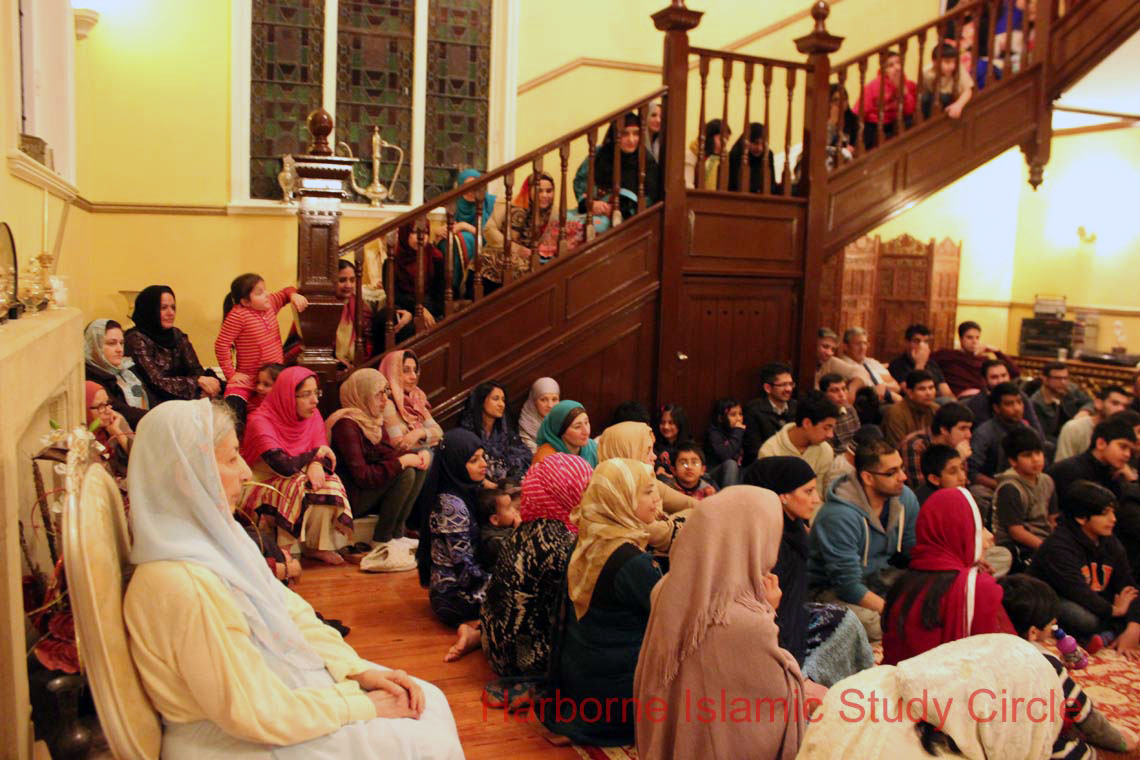
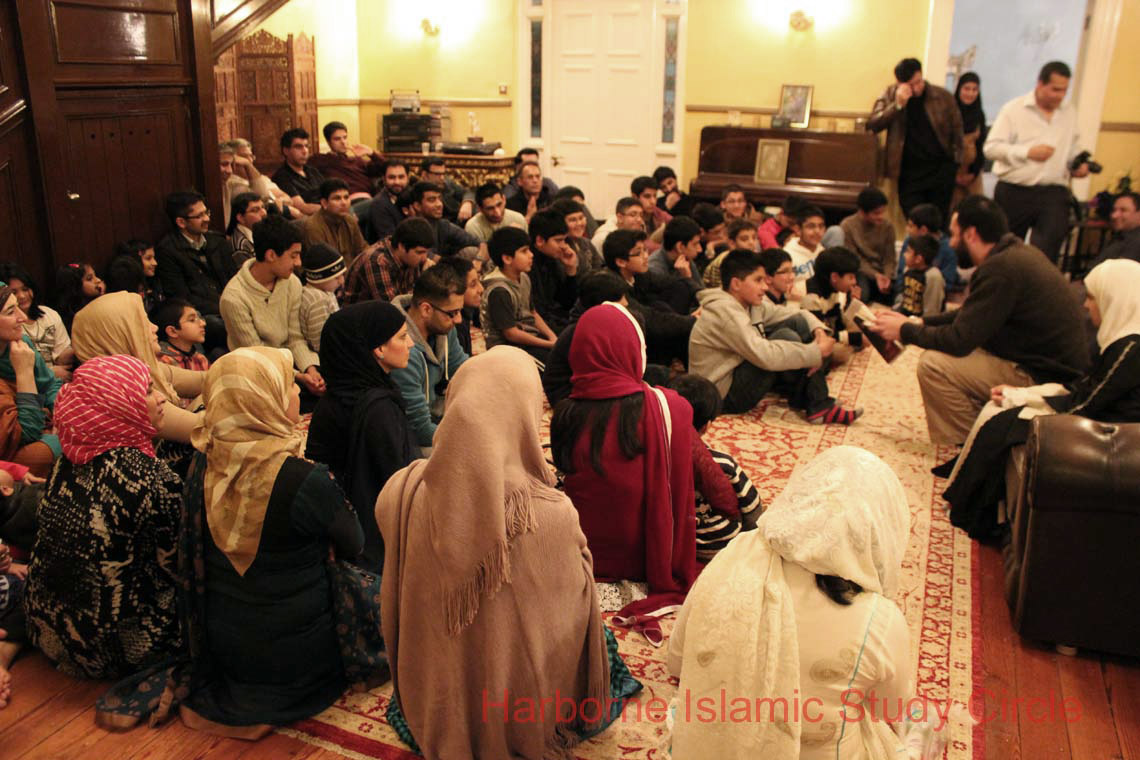
4 January 2015 - Musa Feedback and Mawlid - Celebrating the Prophet's* Birthday

4 January 2015 - Musa Feedback and Mawlid - Celebrating the Prophet's* Birthday


Feedback on The Life of Prophet Musa*

In the conclusion of the life of Musa* we asked the children to highlight their favourite stories from the life of Musa*, and possibly explain why they like these stories.
Some of the responses included (multiple responses in brackets):

- The sign of Blood for the Egyptians
- Musa* and al-Khidr (x2)
- Conflict between Pharaoh and Bani Israel and parallels with today
- Musa* and the Magicians (x4)
- Musa* and slapping the Angel of Death (x3)
- Musa* as a baby in the Nile River
- Musa* chasing the rock that stole his clothes (x2)
- The Signs given to the people of Egypt
- The prominence of Pharaoh’s wife Aasiya
- The story of the hairdresser’s child speaking

HISC Film Trip
We also talked about the upcoming Harborne Islamic Study Circle trip to the cinema to watch ‘Exodus – Gods and Kings’

Main Topic: Rabi’ul-Awwal and ‘Celebrating’ the Birth of the Prophet*

The month of Rabiul Awwal is for many Muslims a time of celebration. Although the exact date of the last and final Prophet’s* birth is debated among the ulema, Ibn Kathir mentions that the most common opinion on the matter is 12th Rabi’ul-Awwal. Regardless of the exact date, Muslims cannot help to notice discussions about the qualities of the Prophet* increase, as well as much mention of aspects of his* life.

Love for Prophet Muhammed*

The love and affection that Muslims have for our Prophet* is only natural, as Allah says in Surah al-Ahzab, “The Prophet is closer to the believers than their own selves” [TMQ 33: 6]

The scholar Az-Zajjaaj said: “Man’s love for Allah and His Messenger is to obey them and to accept what Allah has commanded and the Messenger of Allah* has brought.”

The love of Allah and His Messenger is the type Allah has linked to a shariah concept thereby making it obligatory. The evidence for this is the Book of Allah:

He said: “Say: If your fathers, your sons, your brothers, your wives, your kindred, the wealth that you have gained, the commerce in which you fear a decline, and the dwellings in which you have delight in are dearer to you than Allah and His Messenger, and striving hard and fighting in His Cause, then wait until Allah brings about His Decision (torment). And Allah guides not the people who are Al-Fasiqun (the rebellious, disobedient to Allah).” [TMQ 9:24]

Anas narrated that the Prophet* said:“There are three things whoever obtains them he will experience the sweetness of belief (Iman) – that Allah and His Messenger are more beloved to him than anything else; that he loves a man only for the sake of Allah; and that he dislikes the thought of reverting to disbelief as much as he would dislike being cast into the Fire.”

Anas also narrated that the Messenger of Allah* said: “None of you would be considered a believer until I become more beloved to him than his family, wealth and all the people.”

The companions of the Messenger of Allah* were very much concerned about the application of this duty. They used to compete in attaining this honour hoping that they would be the ones that Allah and His Messenger love. Anas narrated that on the day of the battle of Uhud: That the people ran away, leaving the Prophet*, but Abu- Talha was shielding the Prophet with his shield in front of him. Abu Talha was a strong, experienced archer who used to keep his arrow bow strong and well stretched. On that day he broke two or three arrow bows. If any man passed by carrying a quiver full of arrows, the Prophet would say to him, “Empty it in front of Abu Talha.” When the Prophet started looking at the enemy by raising his head, Abu Talha said, “O Allah’s Prophet! Let my parents be sacrificed for your sake! Please don’t raise your head and make it visible, lest an arrow of the enemy should hit you. Let my neck and chest be wounded instead of yours.

Ibn Hibban reported in his Sahih: “…When Urwah went back to the Quraysh, he said, I have been to the courts of the kings and have seen the splendour of the Caesar, Chosroes and the Negus. But never have I seen any king being so revered as Muhammad* by his companions. By Allah, had he spat out mucus and it just fell on the hands of one of his companions he would have rubbed it on his face and skin. When he ordered them with something they rushed to carry it out and if he made ablution they would fight for the used water. When he spoke they lowered their voices and they did not look sharp at him, as sign of reverence to him …

An-Nawawi reported in his commentary of Sahih Muslim the meaning of loving the Messenger* on the authority of Sulayman al-Khattabi which states: “You will not be true in your love for me until you exhaust yourself in my obedience, until you prefer my pleasure over your whims even if it may lead to your death.”

Believers have no better way of expressing their love for our Prophet* than to love all that He* loved and to dislike all that he disliked. Believers know that what was most beloved to the Messenger of Allah* is also what is most beloved to Allah, so they strive to make that the most beloved to themselves.

The Prophet* as truly honoured among the Prophets, as he was singled out to be the last and final messenger to all of mankind. Ahmad recorded that `Ali bin Abi Talib said that the Messenger of Allah* said, “I was given what no other Prophet before me was given.” We said, “O Messenger of Allah! What is it” He said, “I was given victory by fear, I was given the keys of the earth, I was called Ahmad, the earth was made a clean place for me (to pray and perform tayammum with it) and my Ummah was made the best Ummah.” The reason we were made the best ummah is stated in the ayah: “You are the best ummah singled out for mankind: you enjoin what is right (ma’roof), forbid what is wrong (munkar), and believe in Allah.” [TMQ 3:110]

If a believer finds any aspect of the sunnah of the Messenger of Allah is not beloved to them, they are quick to change that within themselves. Abu Hurayrah narrated that Thumamah b. Uthal said: “O Muhammad. By Allah There was not a face more hated to me than your face but your face has become the most beloved. By Allah! There was no Deen more hated to me than your Deen but your Deen has become the most beloved to me. By Allah! There was no country more hated to me than your country but your country has become the most beloved to me…

Discussion around the excellent qualities of the Prophet* should be encouraged among young and old, as they will only increase love for this noble Messenger that Allah* sent to us, but in that we must not be selective only focusing on some parts of his* Sunnah, whilst neglecting the rest. We must not forget what it was that the Prophet* sent for? What was his mission? What did he bring to us? These are questions which sometimes are lost in the discussion.

Other significance of Rabi’ul-Awwal

It should not be forgotten that Rabi’ul-Awwal is also the month of the hijrah of the Prophet*. From the very first day he* established the authority for Islam. The Establishment of Islam in Madina was the first day of joy for the Muslims. Often when the hijrah is discussed, we can limit ourselves to the details describing how the Prophet* hid in a cave or who slept in his* bed. This inevitably diverts us from discussing the true significance of the event. Umer is reported to have said: “The Hijrah has separated truth from falsehood, so calculate dates from it.”

Rabi’ul-Awwal has further significance for Muslims, as on twelfth day, ten years after hijrah He* passed away. The news of the Prophet’s death was so hard upon close companions and Muslims that some of them refused to believe that he had passed away. Upon hearing this, Abu Bakr went to the mosque and delivered one of the noblest speeches: “O People! If it was Muhammad whom you worshipped, then know that he is dead. But if it is Allah whom you worshiped, then know that He does not die.” He then recited the following verse, which was revealed after the Battle of Uhud: “Muhammad is no more than an Apostle: many were the Apostles that passed away before him. If he died or were slain, will you then turn back on your heels? If any did turn back on his heels, not the least harm will he do to Allah; but Allah (on the other hand) will swiftly reward those who (serve Him) with gratitude.” [TMQ 3:144]

Linking the message / mission of the Prophet* to today

There is oppression around the whole world which is being left un-challenged, at home and overseas. The Prophet* did not rest while Islam was criticised by the Quraysh, and we should not rest while it is criticised today. He* was accused of being too extreme and changing the Arab way of life, and Muslims who practice Islam today are accused of the same thing.

Right in front of us what the Prophet stood for, practiced and conveyed about Implementing Islam to create that just, balanced and harmonious society for all is being attacked by secular fundamentalists within Muslim Countries whose Qibla has changed from Mecca to Washington and London. How can we remain silent in Rabi’ul-Awwal? The Holy Prophet* said: “A day under a just leader is better than sixty years of worship, while the hadd (proscribed punishment) established on the earth according to its right is better than forty days of rain” (Bayhaqi/ Tabarani)

Do we have just leaders who rule by Islam exclusively today? Are we following the Prophet’s* orders on Ruling and politics as prescribed in the hadith above?

In front of us, Muslim Countries are allowing belligerent foreign powers to harm Muslims right under the noses of these rulers under the guise of War on Terror yet they remain silent as do the so-called ‘scholars’. Aren’t those who are being slaughtered the followers of the Prophet?

There is corruption around us in the Muslim World which is being left un-challenged. There is social decay directed by the government who believe that Western Social values are better than Islam (which they state is old and backward) and have created a society where Free-mixing, sleeping around and consuming alcohol are seen as ‘lifestyle choices’

We must find the answers for these questions. We need to learn about the Holy Prophet’s* life, educate ourselves with the rules of Islam that the Prophet* bought us and we must work for that change which the Holy Prophet* sacrificed and Struggled for in his life.

Discussion and unity

Many will use this month as a month of seeking knowledge about the Prophets life. Many have raised objections to singling out this month as a special occasion of worship. In this process, heated arguments and debates may surface on the validity of commemorating the day the Prophet was born. None of these are new issues and in fact have been tackled by scholars of various persuasions who lived under an Islamic System and resolved jurisprudential issues like these based on Daleel (evidence) presented.

The spirit of discussion did not fracture the Unity of Muslims on core issues. Neither did they busy themselves condemning each other. The key focus still remained that Islam be the reference point for all actions, both personal and societal.

Scholarly Approaches

Imam Al-Hafiz Al-Suyuti said: “In my view the Milad is in fact such an occasion of happiness on which people assemble and recite the Holy Qu’ran to the extent that is easy. Then they relate the prophecies concerning the appearance of the Noble Prophet* that have been transmitted in Ahadith and Author, and the miraculous events and signs that took place on his birth. Then food is set before them and according to their desire they partake thereof to satisfaction. This festival of celebrating the birthday of the Noble Prophet* is a Bid’ah Hasanah (good Innovation) and those arranging it will get blessing, since in such a celebration is found the expression of joy and happiness at the greatness and eminence of the Noble Prophet* and his birth”.

Ibn Tay’miah said: “As far as what people do during the Milad, either as a rival celebration to that which the Christian do during the time of Christ’s birthday or as an expression of their love and admiration and a sign of praise for the Noble Prophet*, Allah Almighty will surely reward them for such Ijtihad”

Al-Hafiz Ibn Hajar stated: “Milad Shareef is, in fact, and innovation, which was not transmitted from any pious predecessor in the first three centuries. Nevertheless, both acts of virtue as well as acts of abomination are found in it (i.e. Sometimes acts of virtue are found therein and sometimes acts of abomination). If in the Milad Shareef only acts of virtue are done and acts of abomination are abstained from, then the Milad Shareef is a Bid’ah Hasanah (good innovation), otherwise not.”

Imam Al-Hafiz Al-Qastalani said: “May Allah Almighty shower his Mercy upon a person who takes the days of the month of Rabbi-ul-Awwal, in which the Noble Prophet* was born, as days of feast and celebration for doing so is the best cure for the heart of an ailing person.”

The debates will continue on this topic. The Ulama respected each other’s opinions as any ijtihad (extracted ruling) which has a semblance of daleel is still considered an ijtihad based upon the Knowledge and abilities of the scholar who issued the ruling.

There is great remembrance in this month about the Prophet and his character, the various miraculous incidents where even the animals came to the Holy Prophet* and the love people had for him.

Summary
  • The Prophet* was born and died in the month of Rabi’ul-Awwal. This was also the month of Hijrah. Muslims like to commemorate the Prophet’s* birth and grow to love him*.
  • It is obligatory for Muslims to love the Prophet* and also to obey him* is a way of manifesting this love.
  • Every action is judged according to the intention and if we celebrate his birth to compete with the Christians that is forbidden.
  • The Prophet’s* birth was not celebrated for the first few centuries but was introduced later as a ‘Bidaa Hasana’ (good innovation) – and is allowed as long as the celebration does not go against the Shariah.
  • If we do ‘celebrate’ the birth of the Prophet we must recognise that it is not a religious act (Sunnah or fard) but something permissible (Mubah) especially if we want to remember his* good qualities and get closer to Allah.
  • Previous scholars debated this issue but respected each other’s opinions. There is enough going on in the World to concern the Muslims and sincere scholars and Muslims should remember the message of our Prophet* and follow his call sincerely.

Wednesday, 6 February 2013

3 February 2013

Special Study Circle: Food and Guest Speaker

To be updated soon (with pictures), I/A 


Speaker Details:
(Who kindly filled in at extremely short notice)
Kamran Hussain 
A family man with a loving wife and 4 beautiful children (MA) who has spent time learning about Islam since his early twenties, which included living in Qatar until 5 years ago. He is currently the regular Khatib for the National Grid and works as a Manager of Strategy and Systems Planning. In addition, Kamran is a Trustee of iERA (Islamic Education and Research Academy) and previously edited the Jumuah Magazine.

Hadith:
Abu Sa`id Al-Khudri (May Allah be pleased with him) reported: Prophet of Allah (sallallahu alayhi wassallam) said: "There was a man from among a nation before you who killed ninety-nine people and then made an inquiry about the most learned person on the earth. He was directed to a monk. He came to him and told him that he had killed ninety-nine people and asked him if there was any chance for his repentance to be accepted. He replied in the negative and the man killed him also completing one hundred. He then asked about the most learned man in the earth. He was directed to a scholar. He told him that he had killed one hundred people and asked him if there was any chance for his repentance to be accepted. He replied in the affirmative and asked, `Who stands between you and repentance? Go to such and such land; there (you will find) people devoted to prayer and worship of Allah, join them in worship, and do not come back to your land because it is an evil place.' So he went away and hardly had he covered half the distance when death overtook him; and there was a dispute between the angels of mercy and the angels of torment. The angels of mercy pleaded, 'This man has come with a repenting heart to Allah,' and the angels of punishment argued, 'He never did a virtuous deed in his life.' Then there appeared another angel in the form of a human being and the contending angels agreed to make him arbiter between them. He said, `Measure the distance between the two lands. He will be considered belonging to the land to which he is nearer.' They measured and found him closer to the land (land of piety) where he intended to go, and so the angels of mercy collected his soul".
[Al-Bukhari and Muslim]

In another version: "He was found to be nearer to the locality of the pious by a cubit and was thus included among them". Another version says: "Allah commanded (the land which he wanted to leave) to move away and commanded the other land (his destination) to draw nearer and then He said: 'Now measure the distance between them.' It was found that he was nearer to his goal by a hand's span and was thus forgiven". It is also narrated that he drew closer by a slight movement on his chest.

Commentary:
1. One comes to know from this Hadith that the gate of Taubah is open even for the worst of the sinners; and Allah forgives everyone provided he repents sincerely, the conditions for such repentance have already been discussed.
2. It is the duty of a religious scholar that while discussing a problem, he should keep in mind the psychological aspects of the questioner and adopt a policy which neither causes a change in the Injunction of Allah nor make the sinner reckless in his sins out of frustration.
3. When a situation warrants, angels appear in the form of men on Orders of Allah.


Pictures from the evening


Monday, 28 January 2013

27 January 2012

6th Anniversary of the Harborne IslamicStudy Circle

Full Survey Results

Thank you all for the 52 responses to the online survey.


The results are below:


Hence, by popular demand we hall start to study the Lives of the Prophets (I/A) now that we have chronologically finished the Seerah. That is not to say we know everything about the Prophet*'s life, but are merely acquainted with the major political and social events in his* life. There is, of course, far more to study about the life of the Greatest Man, ever!


By popular demand, we shall keep the Circle to one hour!
However, it is important that people keep to time!!


I have made careful notes on how to improve the Study Circle.I am an constantly seeking to makes things better and to improve the learning experience for people, and welcome all these useful suggestions. InshaAllah, the Circles will be more interactive and inspiring with more quizes and the occasional guest speaker.


It is reassuring that the effort going in to make the handout (and emailed out) is being used by some of you!


It is reassuring that the effort going in to update the blog (website) is being used by some of you!


The respondents were mainly children and teenagers, and more boys than girls...


Time and short Tafsir on Surah al-Asr

Surah al-Asr
The Surah is Makki and it has 3 verses.
With the name of Allah, the All-Merciful, the Very-Gracious
I swear by time,[1] man is in a state of loss indeed,[2]except those who believed and did righteous deeds, and advised each other for truth and advised each other for patience.[3]


Virtues of Studying Surah al-Asr

Ubaidullah ibn Hion reports that whenever two companions of the Holy Prophet met, they would not part company until one of them had recited Surah Al-Asr in its entirety to the other ( transmitted by Al-Tabaarani). Imam Shafi says that if people thought about Surah Al-Asr carefully, it would be enough for their guidance. It is a concise but comprehensive Surah, which in three verses, outlines a complete way of human life based on the Islamic world view.
In the Surah Allah swears an oath by the 'Time" and says that mankind is in a state of loss: exception, however, is made of people ho are characterized by 4 qualities: [1]faith [2]righteous deeds;[3]advising each other for truth and [4] advising each other for patience. this is the only path to salvation in this world, as well as in the next world. The Qur’anic prescription comprises, as we have just seen of four elements. the first two of  them relate to man's own personal betterment and other two relate to other people's guidance and reform [Ibn Kathir]
 

Relationship between 'Time' and 'Human Loss'
The first point that needs to be analysed here is the relationship between the 'oath of time' and 'its subject' because there needs to be a relationship between an 'oath' and 'its subject'. the commentators, generally, state, that all conditions of man, his growth and development, his movements, his actions and morality-all that take place within the space of 'Time'. Man will lose the capital of his existence. Hours, days, months and years of life pass quickly, spiritual and material potentialities, decline, and abilities fade. Man is like a person who possesses great capital and, without his permission and will, every day, a portion of that capital is taken away. This is the nature of life in this word; the nature of continual loss. How well this has been put poetically: "Your life comprises a few breath, that can be counted; when one of them is sent out, a part of your life has diminished."
Allah has granted man the invaluable capital of his life, so that he may invest it in profitable business venture. If he invests his capital of life sensibly in good works, then, let alone attracting profitable returns, he will even lose his capital, and: In addition, he will incur the dreadful scourge of committing numerous sins. If however a person did not invest his life-capital in good deeds or in evil deeds, then he at least, loses both the profit as well as the capital. This is not merely a poetic imagery but is supported by a Prophetic hadith, according to which the Messenger of Allah is reported to have said:
" When a person wakes up in the morning, he invests his soul or life in a business enterprise: some of the investors free or save the capital from loss and others destroy it."
The Quran itself has used the word tijarah in relation to 'faith' and righteous deed' thus: "shall I tell you about a trade that saves you from painful punishment?"( 61:10)
Since “Time" is a man's capital of life, the man himself is a trader. Under normal circumstances, his capital is not a frozen thing that may be kept for a while and used up later when the need arises. The capital is fluid or flowing all the time, every minute and every second. the man who invests it needs to be very wise, intelligent and agile, so that he is able to swiftly and readily reap the profit from a flowing a capital. One of the old scholars said that he had learnt the meaning of this verse from an ice-seller whose trade required utmost diligence, and if he were neglectful for a moment, his entire capital would melt away. that is why this verse has worn an oath by the 'time' to indicate that it is a melting capital and the only loss is to take every moment of his life as valuable, and uses it for the four acts mentioned in the Surah.
Another possible reason for swearing by 'Time' may be that the' time' ( in the sense of history) bears testimony to the fact mentioned in the Surah. If one thinks on the cases of rise and decline of individuals and nations, he would certainly believe that it is only these four acts (mentioned in the forthcoming verses) that may ensure the real success and betterment of mankind. Whoever has ever abandoned them has suffered a great loss, as is evident from numerous events recorded by history.
Let us now study the 'four principles' mentioned  in the Surah. As pointed out earlier, faith and righteous deeds are related to man's moral and spiritual growth and development. They are not in need of elaboration. However, the last two principles (' advising each other for truth') and (advising each other for patience') requires some elaboration.
The infinitive tawasi is derived from wasiyyah, which means 'to advise somebody strongly and effectively about the best thing to do in a particular situation'. The term wassiyyah also refers to a 'will or testament' where a estator advises his executor regarding the disposal of his estate on his death.
The two parts are in fact two chapters of the same testament [1] advice to truth; and [2] advice to patience and fortitude. These two concepts may be explained in different ways. One way to explain them is that haqq ( 'truth') refers to the package of 'correct faith' and ' good deeds' and sabr ( ' patience') refers to abstinence fro all sins and evil deeds. Thus the first cincept refers to 'enjoining good actions' and the second concept refers to 'forbidding evil actions'. The cumulative sense of the Surah is that believers have been enjoined not only to adopt right faith and good deeds themselves, but to advise others strongly and effectively to adopt them and thus help in the creation of a healthy atmosphere around them.
It is also possible to interpret ' Truth' as referring to articles of faith and to interpret 'patience' as referring to all good actions and abstinence from evil deeds. The word sabr, originally meaning to ' withhold oneself and bind oneself', encompasses binding oneself down to the performance of righteous deeds and abstaining from sins.
A scholar has stated in one of the monographs that there are normally two factors that restrain a person from faith and righteous deeds. The first cause is some doubts about the true faith. When such doubts arise in the mind of people, it destroys their faith and leaves them confused and confounded. As a result, it adversely affects their righteous deeds. The second cause is the selfish desires that stop man from doing good and involve him in evil deeds.  In this situation, he theoretically believes that he should do good and abstain from sins, but his selfish desires lead him to stray from the right oath. The current verse indicates to remove both causes of one's distraction. By stressing upon 'advice of truth' it has catered to the first cause and that it should be removed by reforming others on theoretical and academic level, and by emphasizing on ' advice of patience' it has taken care of the second cause by enjoining upon the Muslims to advise others to give up the base desires and remain firm  against their evil demands. Put differently, ' enjoining the truth' means ' improving the knowledge of Muslims or their intellectual development' and enjoining patience' means 'improving the practical life of Muslims'.


Need to Salvage the Entire Muslim Society
The Surah lays down the important principal of guidance for the Muslims that inviting other Muslims to keep to the true faith and good deeds is as much necessary as their own submission to the holy Quran and Sunnah. Without sincere efforts, to the best of one's ability, to invite others to the right path, one's own good deeds are not enough to one's salvation. Especially, if a person does not care of the spiritual and moral welfare of his wife, children and family and turns a blind eye to their unrighteous deeds, he is blocking his way to salvation-no matter how pious he himself might be. Therefore the Quran and Sunnah make it obligatory upon every Muslim to do his best to invite others to the good deeds, and warn them against the evil acts. Unfortunately, let alone the general public, many learned people are lax in this matter. They think it is sufficient for them to be concerned about their own moral and spiritual well-being. They are not concerned about the well-being of their family and children. May Allah grant us the ability to act upon this verse.


Children's Feedback:
6 years of the Study Circle

No Homework

Friday, 11 May 2012

Harborne Islamic Study Circle Survey 2012 Results (33 Responses)

The Top Twenty:

1
Birthdays
2
The creation of a happy daily balance for children – prayer, entertainment, schoolwork and family interaction
2
Main criticisms of Islam and how to challenge these
4
Life of other Prophets (Ibrahim and Isa)
5
Music and clapping
6
The relationship between teenage children and their parents – the importance of rules, respect, etiquette in the family
7
Signs of the End of the World
8
Unifying the Muslims
8
Real meaning of ‘Jannah is under the mother’s feet’
10
The rewards of charity and Zakat; how to set up a charity
11
Celebrating our Deen – why we should be happy and proud
12
Halal marriage
12
The role of Women in Islam
12
Transplants
12
Basics of Belief
12
Stories and interpreting them
17
Evolution and Big Bang
17
Responsibilities for actions
19
Discussing other main religions – similarities and differences with Islam
20
Tafsir of some Surahs


Other Topics
stories of prophets (2)
history of islam-child friendly (2)
clothes in sports/uniforms/daily life (2)
haircuts/hijab/beards (2)
Having a possible 'closed' session with just teenage boys to discuss their physical development stage and how to deal with any 'new' experiences in the right halal way
how to ignore bad TV programmes,
Social Media: Facebook, Twitter, Chat etc
Dinosaurs
Importance of good companion
Modern Politics
how to stay safe on internet
Mobile Phones
who was the first person to use a pen
Science and religion
what things to avoid on internet
What is Jannat and Jahannam, in detail
Spirituality
how to integrate in school with friends without losing ethos of islam
The importance and meaning of Halaal in everything, Food, Marriage etc
Why are we really in this world, the Islamic reason/perspective


Full Results:

Don't want to do at all (1)
Not very interested (2.5)
Don't mind doing (4)
I would like to know more about this (6)
Really, really want to do (10)
Rating
Number of Responses
Rank
Birthdays
3
2
3
9
16
7.1
33
1
The creation of a happy daily balance for children – prayer, entertainment, schoolwork and family interaction
6
1
1
10
15
6.7
33
2
Main criticisms of Islam and how to challenge these
4
2
5
7
15
6.7
33
2
Life of other Prophets (Ibrahim and Isa)
4
3
3
9
14
6.6
33
4
Music and clapping
3
2
7
8
13
6.5
33
5
The relationship between teenage children and their parents – the importance of rules, respect, etiquette in the family
6
1
3
10
12
6.3
32
6
Signs of the End of the World
4
3
5
9
12
6.2
33
7
Unifying the Muslims
5
3
6
7
11
5.9
32
8
Real meaning of ‘Jannah is under the mother’s feet’
5
2
4
13
9
5.9
33
8
The rewards of charity and Zakat; how to set up a charity
4
1
9
10
9
5.8
33
10
Celebrating our Deen – why we should be happy and proud
3
2
10
10
8
5.7
33
11
Halal marriage
3
4
10
8
8
5.5
33
12
The role of Women in Islam
5
1
10
8
8
5.5
32
12
Transplants
5
3
7
10
8
5.5
33
12
Basics of Belief
5
3
9
7
9
5.5
33
12
Stories and interpreting them
3
3
6
15
5
5.5
32
12
Evolution and Big Bang
6
4
7
6
9
5.3
32
17
Responsibilities for actions
4
5
5
13
6
5.3
33
17
Discussing other main religions – similarities & differences with Islam
4
2
13
7
7
5.2
33
19
Tafsir of some Surahs
7
1
7
12
6
5.1
33
20
Bad language and cursing
9
3
5
8
8
5.0
33
21
How difficult is it for a Muslim to practice their religion today compared with when Islam began
3
5
9
12
4
5.0
33
21
Was Islam spread by the sword
6
3
11
6
7
5.0
33
21
Medical dissection
6
3
9
10
5
4.8
33
24
Death and funerals
7
4
8
9
5
4.6
33
25
Famous Converts
6
8
8
6
5
4.4
33
26
Age certificated video games
9
7
5
6
6
4.3
33
27
Bullying
9
3
12
6
2
3.8
32
28